
If you’ve been thinking about chiropractic care but wondering whether it’s actually safe, you’re asking exactly the right question. It’s a question I hear from new patients all the time — and one I asked myself years ago. Here’s what the research says, and what my own clinical experience has shown me.
What Does the Research Say About Whether Chiropractic Care Is Safe?
Let’s start with the science, because you deserve a real answer — not a sales pitch. The short version? Is chiropractic safe for most people? Yes. The evidence consistently supports this conclusion, and the research base continues to grow stronger with each passing decade.
A Harvard Health review of spinal manipulation concluded that chiropractic care is generally safe when performed by a trained and licensed provider for appropriate conditions. Research published in Spine — one of the most respected peer-reviewed journals in musculoskeletal medicine — tracked patient outcomes for those receiving chiropractic adjustments for low back pain and found that no serious adverse events were reported in the overwhelming majority of cases.
Additional studies from the Journal of Manipulative and Physiological Therapeutics confirm that chiropractic spinal care carries a lower risk profile than many commonly accepted medical interventions, including long-term use of over-the-counter pain medications.
What does that mean for you practically? It means that for the vast majority of people dealing with back pain, neck discomfort, or musculoskeletal issues, chiropractic treatment is a clinically sound and evidence-backed choice.
That said, “safe” doesn’t mean “right for everyone in every situation.” Like any form of healthcare, good chiropractic care starts with a thorough assessment — not a one-size-fits-all adjustment. At The Healing Place in Franklin, TN, we never skip that step. We use INSIGHT scanning technology to evaluate your nervous system before recommending any care plan. The guesswork disappears. The safety margin goes up.

What Side Effects Should You Know About?
Being honest about side effects isn’t a weakness — it’s what separates good clinicians from great ones. When patients ask me about side effects before starting care, I appreciate the question. It tells me they’re engaged in their own health. So let’s talk through what you might realistically experience before your first visit.
Temporary soreness or mild achiness after an adjustment
This is by far the most commonly reported experience, and it typically resolves within 24 to 48 hours. Think of it like the mild soreness after a good workout — your body is responding to movement and realignment it wasn’t used to. Most patients describe it as minor and manageable, with no disruption to daily activity.
Mild fatigue following your first few visits
Some patients notice they feel more tired than usual after early chiropractic treatments, particularly if they’ve been dealing with chronic tension or postural stress for a long time. This is your nervous system recalibrating. It passes quickly, and most patients report feeling noticeably better within a week of starting care.
Temporary increase in local discomfort
In some cases — especially when there’s significant spinal dysfunction — the area being addressed may feel more tender for a short period following a chiropractic adjustment. This is normal and expected as part of the healing response, and it typically diminishes as your body adapts to proper alignment and improved nervous system function.
Headache in rare instances
A small percentage of patients report a mild headache following cervical manipulation or upper spine work. This is more commonly reported by people who carry significant tension in the neck and shoulders. When it does occur, it’s usually brief, and no serious side effects were reported in well-designed clinical studies examining this outcome over time.
The important distinction here is between expected responses — which are temporary, mild, and part of the healing process — and serious adverse events, which are genuinely rare when chiropractic adjustments are performed correctly by a qualified provider. Understanding that difference helps you evaluate your experience accurately and communicate clearly with your chiropractor.
Chiropractic Adjustments Are Safe When Performed by a Licensed Provider
Here’s something that gets overlooked in a lot of online discussions about chiropractic safety: provider quality matters enormously. Chiropractic adjustments are safe when delivered by a licensed, trained practitioner — and the research bears that out. But that finding applies specifically to care performed using appropriate technique for appropriate conditions with proper patient screening.
This isn’t a minor qualifier. It’s the whole point.
When you see a licensed chiropractor who conducts a thorough intake, reviews your health history, and uses evidence-informed protocols, you are receiving a safe musculoskeletal treatment with a strong track record. When spinal manipulation is performed without proper evaluation — by someone unqualified, or applied to a patient with a contraindication — the risk profile changes entirely.
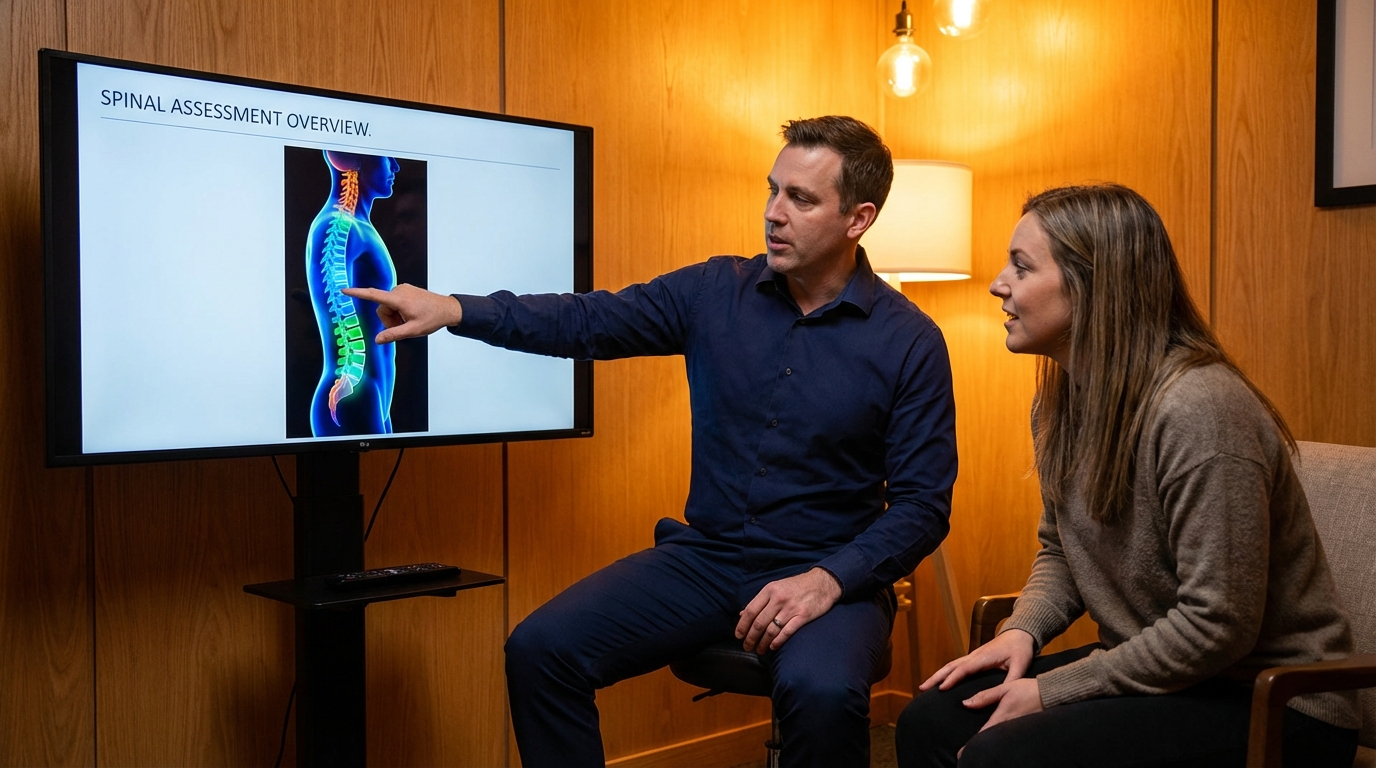
I take this seriously in my own practice. Before we ever perform a chiropractic adjustment at The Healing Place, we complete a full neurological assessment using INSIGHT scanning technology. We’re not looking just at your spine in isolation — we’re evaluating how your entire nervous system is functioning. That data guides every care decision. That’s how receiving chiropractic care should work.
The bottom line is this: ask about your provider’s training, their assessment process, and their approach to contraindications. A good chiropractor welcomes those questions. One who doesn’t? That’s a red flag worth paying attention to.
Understanding Chiropractic Risks: What the Evidence Actually Shows
Let’s address the concern that comes up most frequently in online forums and media coverage — the risk of serious injury from chiropractic care, particularly involving the neck. It’s a legitimate question, and you deserve a straightforward answer grounded in what the research actually shows rather than what generates the most alarming headlines.
The most discussed potential risk involves cervical manipulation and a very rare condition called vertebral artery dissection. This has received significant media attention over the years, leading many people to believe chiropractic treatment carries substantial danger. The evidence doesn’t support that conclusion.
Multiple systematic reviews have examined this relationship and found that the incidence of serious adverse events following chiropractic care is extremely low — estimated at roughly 1 in several hundred thousand to 1 in several million adjustments, depending on the study. To put that in context, the risk of serious complications from commonly used medications for the same pain conditions is often significantly higher.
Are there real chiropractic risks that warrant disclosure? Yes — and any ethical chiropractor will discuss them with you before beginning care. Contraindications for chiropractic treatment include certain fractures, severe osteoporosis, inflammatory arthritis in active flare, and specific vascular conditions. A qualified provider screens for all of these during the intake process. If you have a history of any of these conditions, that conversation needs to happen before any spinal work begins.
What I’ve seen in practice over many years — treating professional athletes in Asia and families here in Middle Tennessee — is that the vast majority of concerns about chiropractic risks arise from cases where proper screening didn’t happen. When it does happen, the risk profile looks very different. That’s why assessment isn’t optional. It’s foundational.
Who Benefits Most From Chiropractic Care?
The research on chiropractic effectiveness is strongest in certain areas, and understanding those areas helps you evaluate whether this is the right path for your situation. Patients who tend to see the most consistent results share some common characteristics — and the range is broader than most people expect when they first walk through our door.
Adults with acute or chronic low back pain
This is the most extensively studied application of chiropractic care, and the evidence is compelling. Multiple clinical trials comparing spinal manipulation to other treatments for low back pain — including physical therapy, medication, and standard medical care — have found chiropractic to be as effective or more effective for both short-term and longer-term outcomes. The research base here is substantial.
Individuals dealing with neck pain and tension headaches
Chiropractic adjustments targeting the cervical spine have shown consistent results for neck-related pain and tension-type headaches. Several high-quality studies support this application, making it one of the better-evidenced uses of spinal manipulation in clinical practice for adults of all ages.
Children with nervous system dysfunction, colic, and developmental concerns
This is an area I’m particularly passionate about, having spent much of my career working with pediatric patients. Our pediatric chiropractic care uses gentle, neurologically focused adjustments — nothing like the aggressive technique you might picture — that may support healthy nervous system development. We’ve seen families address conditions including colic, sleep difficulties, sensory processing challenges, and ADHD through this approach. The key word is “gentle,” and the key framework is neurological assessment first.
Pregnant women seeking support during the perinatal period
Prenatal chiropractic care using Webster technique may provide meaningful support for pelvic alignment, nervous system balance, and overall comfort during pregnancy. Many of the moms we care for at The Healing Place report significant improvements in sleep quality, reduced discomfort, and easier labor preparation as a result of consistent care throughout their pregnancy.
Families seeking a proactive, whole-body approach to wellness
Are chiropractors safe for ongoing preventive care? Yes — and this proactive model is one of the things that sets neurologically focused practitioners apart. We’re not just addressing pain after it appears. We’re supporting your nervous system’s capacity to regulate, communicate, and heal over time.

Why Neurologically Focused Chiropractic Treatments Are Different
Not all chiropractic treatments are the same — and I want to be direct about that, because it matters for both safety and outcomes. The approach we use at The Healing Place isn’t what most people picture when they think about seeing a chiropractor for the first time.
Most people picture chiropractic as a quick back crack to relieve pain. That’s one model. What we practice at The Healing Place is fundamentally different. Our entire approach is built around the nervous system — specifically, how dysfunction in spinal alignment creates interference in the brain-body communication network that governs virtually every function in your body.
We use CLA INSIGHT scanning technology to measure neurological function objectively. This isn’t a subjective assessment based on where it hurts. It’s a data-driven picture of how your nervous system is actually performing — where there’s interference, where there’s tension, and what needs to change. That data drives our care decisions for every patient, whether it’s an infant with colic, a mom in her third trimester, or an adult dealing with years of accumulated spinal stress.
The result is a more targeted, more personalized, and ultimately safer approach to chiropractic care. When you understand exactly what’s happening neurologically, you’re not guessing about what to adjust or how much force to apply. The treatment matches the finding. Every time.
This is what neurologically focused chiropractic care looks like in practice — and it’s what makes The Healing Place different from a conventional chiropractic clinic in Franklin, TN, or anywhere else in Middle Tennessee.
What to Ask Before Your First Chiropractic Adjustment
If you’re considering your first chiropractic adjustment, going in with the right questions puts you in the best possible position. These are the exact questions I’d want any family member of mine to ask before starting care at any practice, including ours.
What does your intake process include?
A thorough intake should cover your full health history, any relevant medical conditions, imaging or prior diagnoses, and — in a neurologically focused practice — a comprehensive nervous system assessment. If someone wants to adjust you before completing a proper evaluation, that’s a problem.
Do you screen for contraindications?
This should be standard, but ask anyway. Certain conditions — active fractures, specific vascular concerns, severe bone density loss — are absolute or relative contraindications for spinal manipulation. Your provider should have a clear process for identifying these before beginning chiropractic treatment.
How will you explain the care plan before we start?
Understanding what you’re receiving and why it’s being recommended matters. A good chiropractor takes the time to explain your findings, discuss your options, and make sure you’re comfortable before any care is performed. Informed consent isn’t a technicality — it’s the foundation of a good patient-provider relationship.
What kind of results do patients with my condition typically see?
This is where an experienced chiropractor will give you realistic expectations rather than overpromising. Real clinical experience means knowing which conditions respond well, which take longer, and which might need collaborative support from other providers. Honest answers here tell you everything about the practitioner’s integrity.

The Bottom Line on Chiropractic Safety
Here’s what I want you to walk away with: chiropractic care has a strong safety record, backed by decades of clinical research and real-world outcomes across millions of patients. When performed by a licensed provider who conducts proper assessment, screens for contraindications, and uses appropriate technique, chiropractic adjustments are safe for a wide range of ages and conditions — from newborns to seniors.
The side effects that do occur are almost always mild, temporary, and part of the normal healing process. Serious adverse events are genuinely rare. And for many of the conditions people are dealing with — back pain, neck pain, nervous system dysfunction, and pediatric health challenges — chiropractic care offers a meaningful, evidence-based alternative to medication or invasive procedures.
What makes the difference is finding the right provider. One who takes the time to understand your full picture before touching your spine. One who uses objective data, not guesswork. One who treats your family like their own.
That’s what we’ve built at The Healing Place in Franklin, TN. If you’d like to learn how neurologically focused chiropractic care might support your health or your family’s wellness, we’d love to have a conversation. Schedule your consultation with us — and come in with your questions. We’re ready for them.
This content is for educational purposes and does not replace professional medical advice. Please consult with a qualified healthcare provider about your specific health needs before beginning any new care.