
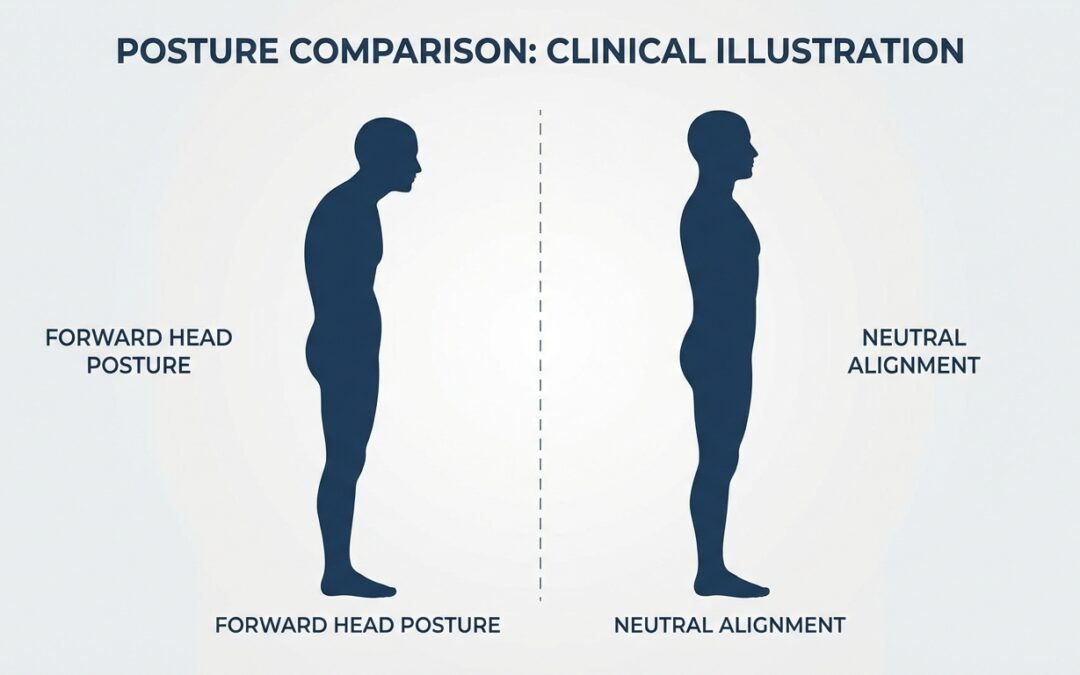
Most people don’t think about posture until something starts hurting. A stiff neck, persistent back pain, or that constant tension dragging across your shoulders — these are signals your body has been sending for a while. If any of that sounds familiar, working with a chiropractor for posture may be the step you haven’t taken yet.
Why Bad Posture Is More Than a Bad Habit
If someone told you to stop slouching as a kid, you probably assumed posture was just a discipline problem. What most people never learn is that postural problems often have a structural root — and no amount of willpower corrects a spine that has gradually shifted out of alignment over months or years.
I was that kid growing up. Asthma, chronic tension, always uncomfortable — and nobody connected the dots to what was actually happening structurally. It wasn’t until a serious back injury during my soccer career introduced me to chiropractic care that I began to understand how profoundly spinal alignment affects everything — posture included.
When vertebrae become restricted or misaligned, the surrounding muscles compensate. Some shorten. Others lengthen. Over time, those compensatory patterns become the new normal, pulling your frame off-balance in ways that are genuinely difficult to reverse without addressing what’s happening in the spine itself.
That compensation doesn’t just change how you look — it creates interference in your nervous system, the communication highway between your brain and your body. Muscle coordination suffers and fatigue increases. The whole cycle reinforces itself, which is exactly why chiropractic doesn’t treat postural problems as a surface-level habit issue. We look at what’s structurally driving them.
Can a Chiropractor Fix Posture? What the Evidence Actually Says
This question comes up constantly at The Healing Place in Franklin, TN — and the answer is a confident yes. That said, it comes with realistic expectations about what posture correction actually involves and how long meaningful structural change realistically takes to achieve in the spine.
Clinical evidence consistently supports chiropractic as an effective approach for improving spinal alignment and postural balance. Research examining chiropractic adjustments combined with targeted exercise has found meaningful improvement in forward head posture — one of the most widespread postural problems in adults today. Additional clinical work demonstrates that consistent care can reduce abnormal spinal curvature, improve load distribution across the body, and ease the musculoskeletal strain that builds from years of bad posture.
A chiropractor can correct poor posture when the structural issues are being addressed directly — not just managed around. That said, if your postural patterns have been developing for years, you’re not reversing them in two visits. Chiropractors are posture experts precisely because the entire training focuses on how the spine moves, where it deviates, and what specific adjustments are needed to create meaningful correction over time.
That timeline isn’t a flaw in the approach. It’s an accurate reflection of how structural change works in the human body.
How Chiropractic Adjustments Actually Improve Posture
Chiropractic adjustments work by restoring proper motion and positioning to spinal joints that have become restricted, fixated, or misaligned. When applied consistently as part of a personalized treatment plan, these targeted corrections build the structural foundation that makes better posture not just possible — but sustainable.
Here’s what’s actually happening mechanically when you receive an adjustment:
Restricted joints are mobilized and reset. When a spinal segment locks up, the surrounding muscles compensate by pulling the vertebra further out of position. An adjustment restores movement to that joint, prompting those muscles to release their protective tension — often producing immediate improvement in how you stand and carry yourself throughout the day.
Nerve interference along the spine is reduced. Every chiropractic adjustment directly affects your nervous system. When a vertebra sits out of alignment, it can create pressure on nearby nerves, disrupting signals that coordinate muscle function and postural control. Correcting that segment allows cleaner brain-to-body communication, with noticeable downstream effects on how naturally you hold yourself upright.
Muscle balance begins to normalize. Years of compensation create tight muscles on one side and weakened muscles on the other, continuously pulling the spine off-center. As chiropractic adjustments restore structural balance, overworked muscles gradually release and underworked ones begin re-engaging — producing the kind of lasting posture correction that actually holds between visits.
Body awareness and proprioception improve. This outcome surprises patients most. After consistent care, many people report noticing their posture more naturally and self-correcting without consciously thinking about it. When spinal joints move properly, your body’s internal position sensors — the proprioceptive system — function with greater accuracy, making proper posture genuinely easier to maintain.
Together, these mechanisms explain why chiropractic delivers results that posture braces, ergonomic tools, and periodic stretching can’t fully replicate on their own. Those approaches work around a misaligned spine. Chiropractic addresses the spine directly.
The Link Between Posture Correction and Chronic Back Pain
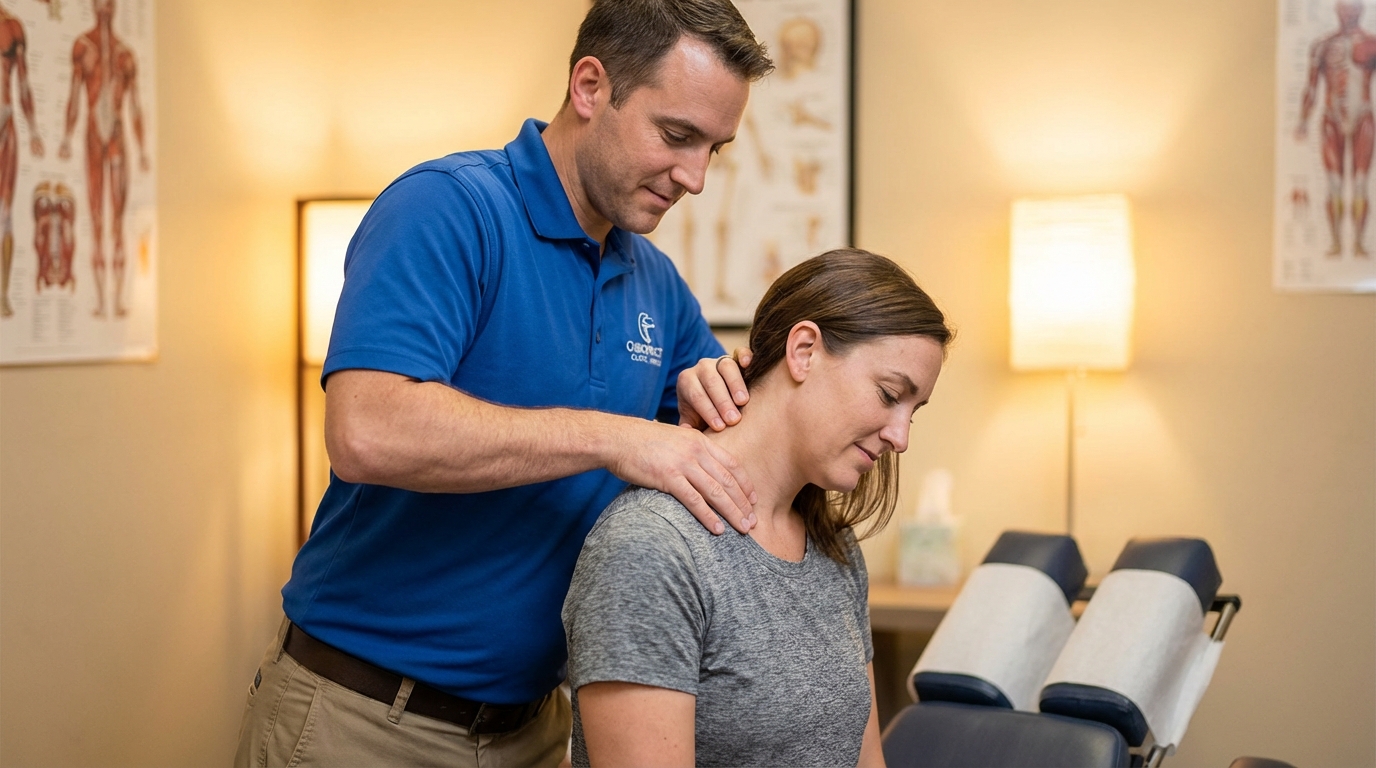
If you’ve been dealing with chronic back pain and wondering why nothing has fully resolved it, your posture may be the missing piece that nobody has actually addressed. At The Healing Place, we regularly work with patients who’ve tried massage therapy, stretching programs, ergonomic furniture, and over-the-counter solutions — with limited lasting relief — because the postural root cause was never corrected.
Bad posture places uneven mechanical load on spinal discs, muscles, and ligaments. Over time, that imbalance creates the kind of chronic inflammation and wear that becomes self-perpetuating. Forward head posture alone — where the head shifts forward of the shoulders by even an inch or two — substantially increases the effective load on the cervical and upper thoracic spine. The muscles straining to compensate never fully recover, and the back pain keeps returning.
Chiropractic works upstream from where it hurts. Rather than treating back pain as the problem itself, we assess how the whole spine is functioning and where alignment has broken down. That’s why many patients experience not just posture improvement, but meaningful and lasting reduction in back pain after committing to a full care plan.
Scoliosis is worth addressing here as well. Chiropractic care cannot structurally reverse an established scoliotic curve, but strong clinical evidence supports that chiropractic adjustments can meaningfully reduce associated back pain, improve spinal mobility, and — when combined with specific therapeutic exercise — help stabilize the curve in mild to moderate cases. For many patients managing scoliosis, this whole-body approach genuinely changes daily life.
What Good Posture Actually Looks Like
Before focusing on how to improve posture, it helps to clearly define what we’re working toward. Good posture isn’t a stiff, rigid stance that requires constant effort to maintain — it’s a balanced, natural alignment that allows your body to function efficiently with minimal strain.
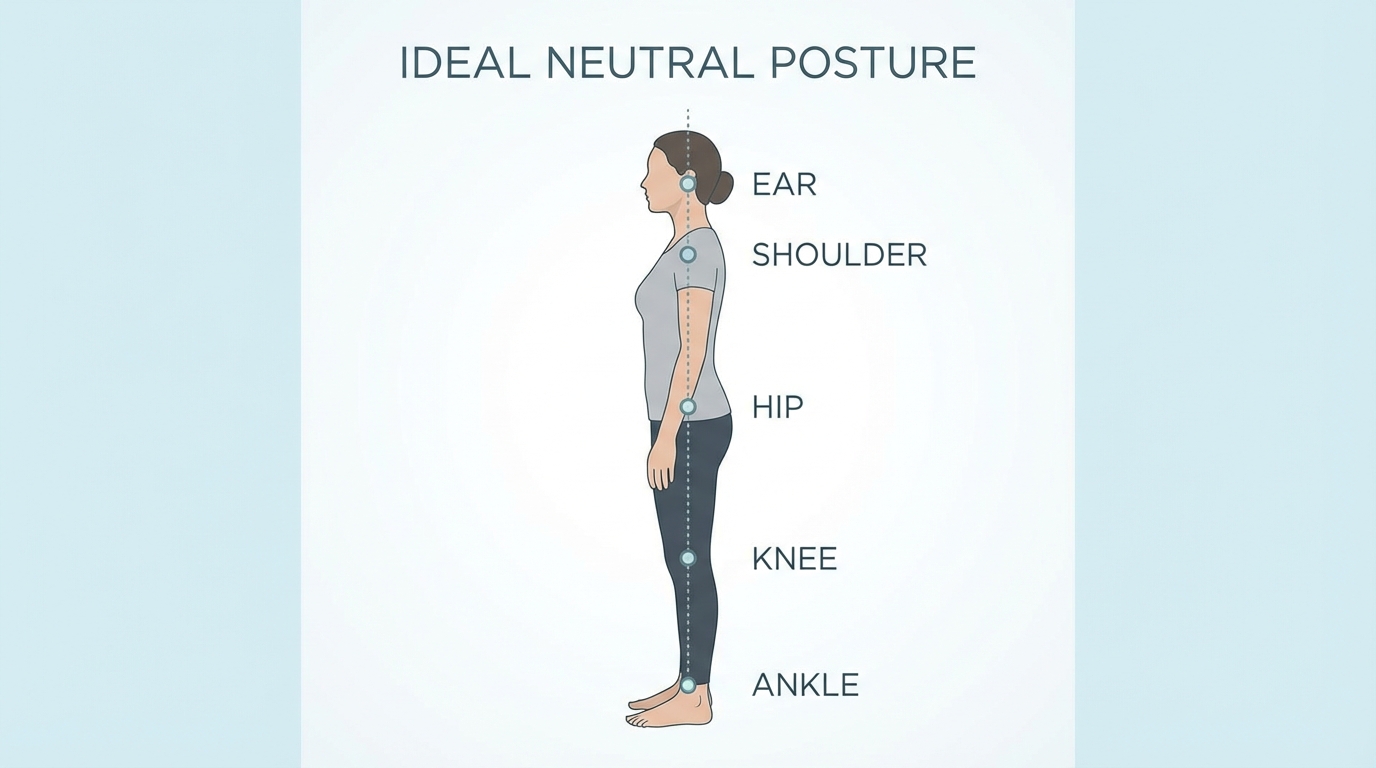
From a chiropractic standpoint, optimal posture includes these structural markers:
Ears aligned directly over the shoulders. This is the most common postural deviation we see in practice. For every inch your head shifts forward of this line, the mechanical load on your cervical spine substantially increases — which is why neck pain, tension headaches, and upper back stiffness so often show up at the same time.
Shoulders level and sitting back, not rounded forward. Rounded shoulders develop gradually — usually from extended hours at a desk, behind a wheel, or looking at a screen. Over time, this tightens the chest and anterior shoulder muscles while weakening the mid-back stabilizers, creating a self-reinforcing pattern that becomes increasingly difficult to change without addressing the underlying structure.
Neutral lumbar curve maintained in the lower back. A healthy lumbar spine carries a gentle inward curve. When this is lost through prolonged sitting, muscle imbalance, or pelvic dysfunction, load concentrates unevenly on the lumbar discs — contributing directly to the low back pain patterns that bring many patients through our door in Franklin, TN.
Level hips and a neutral pelvis throughout the day. The pelvis is the foundation of the entire spine. Anterior or posterior pelvic tilt affects spinal alignment at every level above it. Getting this base right is where meaningful posture treatment begins — and it’s one of the first structural elements we assess at The Healing Place.
Reaching and sustaining this level of proper posture isn’t something you maintain through constant mental reminders. It’s something your body holds naturally — once the structural barriers have been removed.
CBP: An Advanced Chiropractic Approach to Posture Treatment
Not all chiropractic approaches to spinal alignment correction are identical. One of the most research-supported methods for serious structural correction is Chiropractic BioPhysics — commonly referred to as CBP. This advanced protocol combines precise chiropractic adjustments, spinal traction, and rehabilitative exercise to create structural changes that go deeper than standard adjustment work alone.
CBP is particularly well-suited for patients dealing with significant forward head posture, loss of the natural cervical curve, or hyperkyphosis — the exaggerated rounding of the upper back increasingly seen in younger patients from chronic screen use. The protocol applies mirror-image adjustments, where corrections are delivered as the precise structural opposite of the patient’s deviation, reinforced with targeted therapy to consolidate the change over time.
What makes CBP genuinely compelling is the emphasis on objective measurement. Pre- and post-X-ray documentation allows us to track actual structural change — not just how a patient feels, but what’s measurably different in the spine. That kind of accountability is something we take seriously.
A personalized treatment plan always drives the process. What’s appropriate for a 42-year-old who’s developed a significant forward head problem from years at a desk may look completely different from the approach for a teenager showing early postural deviation. That individualization is fundamental to getting real, lasting results.
How to Improve Posture Between Chiropractic Visits
Chiropractic adjustments do the structural work — but what happens between visits matters too. The patients who see the fastest, most lasting results are the ones who actively support their care plan at home. Here’s what we typically recommend to keep the improvement process moving forward:
Doorway stretches for chest and shoulder opening. Rounded shoulders involve tight anterior chest muscles and weakened mid-back support. Consistent doorway stretches counteract this pattern directly and reinforce the structural corrections your chiropractic adjustments are initiating at the spinal level.
Chin tucks for cervical curve restoration. If forward head posture is part of your picture, daily chin tuck exercises help retrain the deep cervical muscles and reinforce spinal alignment corrections happening in your care plan. These take less than a minute and can be done right at your desk between tasks.
Intentional movement breaks every 45 to 60 minutes. Prolonged static postures — especially sitting — compress spinal discs and reinforce bad posture patterns your body has learned over time. Regular movement breaks allow the spine to decompress and maintain the mobility gains your adjustment visits are building.
Strengthening work targeting the posterior chain. The muscles of the mid-back, glutes, and hamstrings provide the foundational support an upright spine depends on. Basic strengthening exercises targeting these muscles complement your chiropractic care and accelerate the pace of visible, lasting improvement.
None of this replaces the structural work of chiropractic — but all of it supports it. The patients who improve fastest are consistently the ones who take the whole-body approach seriously, both in the office and at home.

A Chiropractor Can Help You Where Other Approaches Haven’t
Many patients arrive at The Healing Place in Franklin, TN having already tried posture braces, physical therapy, yoga, and ergonomic setups — without the lasting improvement they were hoping for. There’s a clear structural reason why those approaches often fall short on their own.
Posture braces and ergonomic tools modify the environment around a misaligned spine. They can temporarily reduce strain, but they cannot restore a restricted joint or rebuild a compromised spinal curve. Exercise and stretching strengthen and lengthen muscles, but when those muscles are working against a structurally compromised skeleton, the gains stay partial and temporary.
Chiropractic works at the structural level — directly addressing the spinal joints themselves. Chiropractors are posture experts in the truest clinical sense because every element of the training, the assessment, and the care plan is built around understanding and restoring spinal alignment. That’s the piece that other approaches simply cannot reach.
Here’s what I’ve seen consistently in practice: the best outcomes come from combining chiropractic adjustments with targeted exercise, lifestyle modifications, and where relevant, nutritional support for tissue health. That whole-body approach is exactly what we deliver at The Healing Place — not because it sounds good, but because it’s what actually produces results that hold.
What to Expect at The Healing Place
If you’re ready to work with a chiropractor for posture, here’s exactly how the process looks at The Healing Place in Franklin, TN. From your very first visit, everything is built around understanding your specific spine — not a generic protocol designed for the average patient.
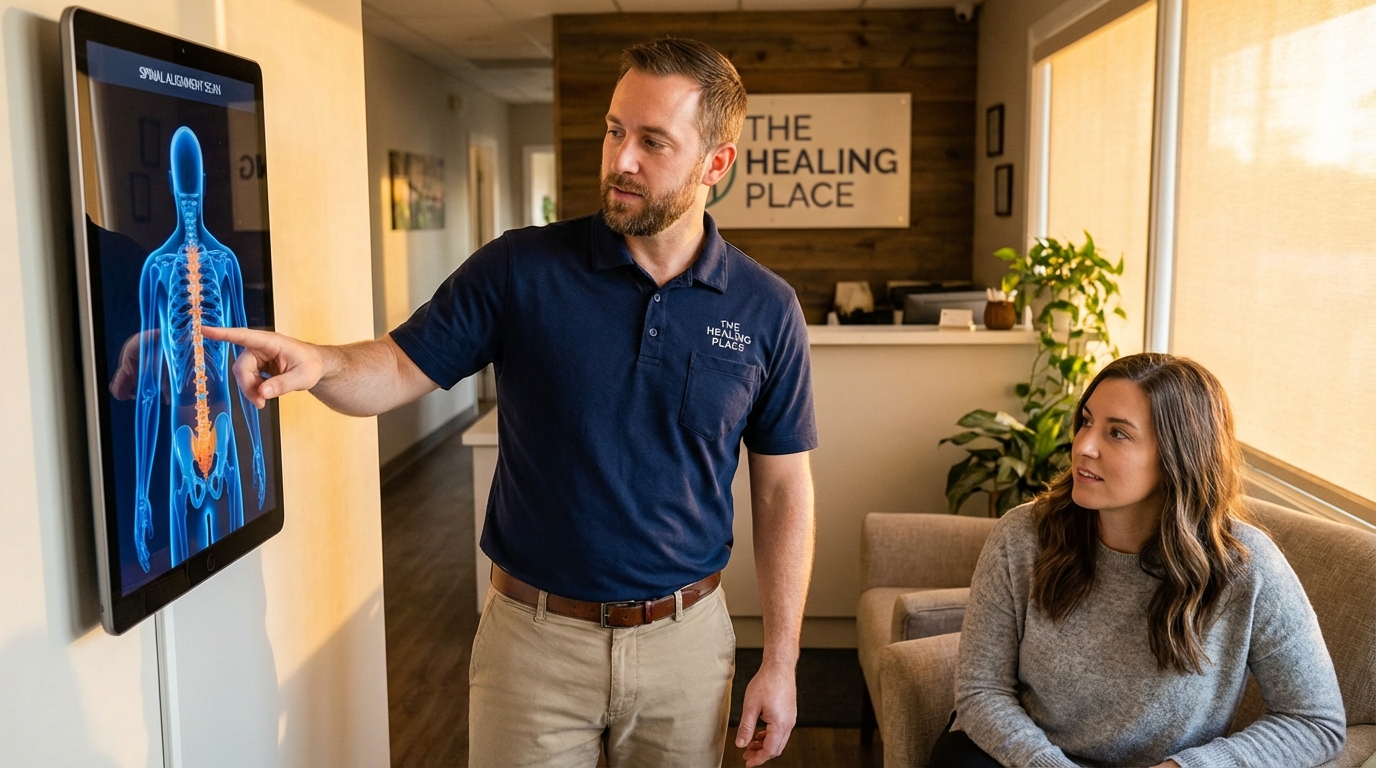
Every care plan begins with a thorough assessment. We use our CLA INSIGHT scanning technology to evaluate nervous system function and identify where spinal stress is concentrated. Combined with a detailed postural analysis and digital X-rays where indicated, this gives us objective data to build from — not guesswork.
From there, we create a personalized treatment plan designed entirely around your spine and your life. The type of adjustments, the supporting exercises, the care timeline — all of it reflects your specific presentation. Early visits focus on reducing restriction and beginning the structural shift. As care progresses, protocols are refined and home rehabilitation becomes increasingly targeted.
At key milestones, we reassess. Repeat scans and measurements document the actual structural changes taking place, keeping us accountable to your outcomes and giving you real, tangible evidence of the progress being made.
Your body is designed to function well. The nervous system is the master controller of everything in it, and a well-aligned spine keeps that system running the way it should. If you’ve been dealing with postural problems, chronic tension, or back pain that hasn’t fully resolved, we’d love to help. You can also learn more about our neurological chiropractic approach and how it differs from conventional spinal care.
For families dealing with postural concerns that started in childhood — including developmental patterns that often go unaddressed — our pediatric chiropractic care takes the same assessment-first approach adapted specifically for younger patients.
Schedule a consultation at The Healing Place in Franklin, TN. Whether you’re working through mild postural imbalances or more significant spinal alignment challenges, we’ll build a care plan that fits your goals and gets you moving in the right direction.
This content is for educational purposes only and does not replace professional medical advice. Please consult a qualified healthcare provider about your specific health needs.