

We’ve all done it. That satisfying pop when you twist just right, lean back in your chair, or stretch after sitting too long. For a moment, it feels like relief. But here’s the question I get asked almost weekly at The Healing Place: Is popping your back actually bad for you? And more importantly, is that quick crack doing what you think it’s doing?
As someone who spent years dealing with back pain as a professional soccer player, I get the temptation. When your spine feels tight and uncomfortable, the urge to twist, crack, and pop until something gives way is powerful. The problem is, what feels like relief in the moment might be setting you up for bigger problems down the road. Let me explain why cracking your own back isn’t the same as getting a proper chiropractic adjustment, and what’s actually happening inside your body when you hear that pop.
What Actually Happens When You Crack Your Back
Before we dive into whether self-adjustment is dangerous, let’s talk about what’s really going on when you hear that cracking sound. Understanding the mechanics helps explain why DIY chiropractic care isn’t as simple as it seems.
Your spine is made up of 24 movable vertebrae, each separated by joints called facet joints. These joints are surrounded by synovial fluid, which helps them move smoothly. When you crack your back, you’re creating negative pressure in those joints, causing gas bubbles in the synovial fluid to rapidly collapse. That’s the popping sound you hear.
Here’s what most people don’t realize: the joint that pops isn’t always the joint that needs attention. Your body naturally wants to move where it’s already hypermobile (too loose), not where it’s restricted. So when you twist to crack your back, you’re often mobilizing joints that are already moving too much, while the tight, restricted joints stay stuck exactly where they are.
Think of it like this: imagine you have a chain with several links. Some links move freely, while others are rusted shut. When you pull on that chain, which links are going to give? The ones that already move easily. The rusted ones stay locked up. That’s exactly what happens when cracking your back becomes a habit. You’re reinforcing the problem, not fixing it.
Is Cracking Your Back Harmful? Understanding the Risks
The short answer: it depends on how often you do it and how forcefully. While occasional popping may not seem harmful at first, repeated self-cracking can lead to significant problems over time. Let me walk you through what can actually go wrong when self-adjustment becomes your go-to solution.
First, there’s the issue of hypermobility I mentioned earlier. When you repeatedly crack the same areas of your spine, you stretch the ligaments that provide stability to those joints. Over time, these ligaments can become permanently lax, leading to chronic instability. I’ve seen patients whose spines are so hypermobile in certain areas that simple movements cause pain because there’s no structural support left.
Second, you can actually cause muscle strain and soft tissue damage. When you forcefully twist your spine, especially if you use leverage from furniture or have someone else apply pressure, you’re putting stress on muscles, tendons, and ligaments that aren’t meant to handle that kind of force. This can lead to inflammation, muscle spasms, and even trigger point development that creates more pain than you started with.
Third, and this is critical: you can aggravate underlying conditions without knowing it. I’ve worked with patients who had undiagnosed disc herniations, spinal stenosis, or facet joint arthritis. They were cracking their backs regularly, thinking they were helping themselves. In reality, they were making their conditions worse. Some ended up with nerve compression that required more aggressive intervention because they didn’t get a proper assessment early on.
Why Popping Your Back Provides Only Temporary Relief
I completely understand why people keep cracking their backs. That immediate sense of relief is real. But let me share what I’ve seen in practice over the past decade: the more you crack your own back, the more you need to crack it. Sound familiar?
Here’s why that relief is so temporary. When you self-adjust, you’re triggering a neurological response that temporarily reduces pain signals. Your brain releases endorphins, and the stretched muscles around the joint relax for a bit. It feels like you’ve solved something. But you haven’t addressed the root cause of why that area felt tight in the first place.
The joints that actually need adjustment remain restricted. Meanwhile, the joints you keep popping become increasingly unstable. Over time, this creates a cycle where you need to crack more frequently to get the same relief. What started as an occasional habit can turn into something you feel compelled to do multiple times per day.
In my experience working with patients who were chronic self-crackers, many describe the same pattern. They started popping their back once in a while when it felt stiff. Within months or years, they were doing it constantly throughout the day. The relief periods got shorter and shorter. That’s not healing. That’s your body telling you something deeper is wrong.
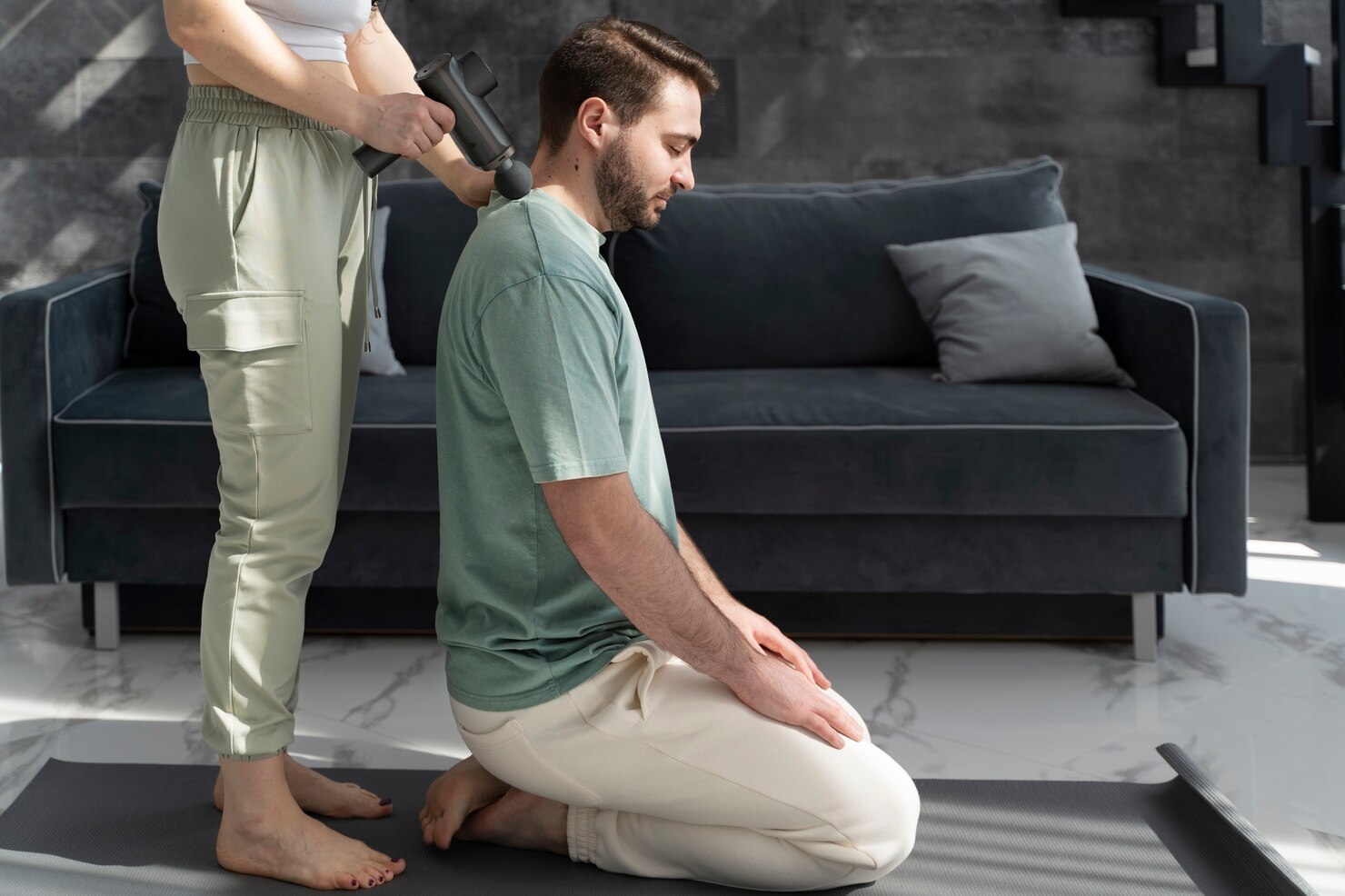
Why Self-Adjustment Is Different From Professional Chiropractic Care
When patients tell me they “adjust themselves,” I always ask them to show me how. What I see is usually some combination of twisting, pressing against a chair, or having someone walk on their back. These methods share one critical problem: they lack specificity, precision, and an understanding of what your spine actually needs.
Professional chiropractic adjustments aren’t random. Before I touch anyone’s spine, I’ve done a thorough neurological assessment, often using our INSIGHT scanning technology to identify exactly where the nervous system is experiencing interference. I’m looking at spinal alignment, muscle tension patterns, and how your nervous system is functioning overall. Only then do I determine which specific segments need adjustment, in which direction, and with how much force.
The adjustments we perform at The Healing Place are targeted, controlled, and gentle. We’re moving specific vertebrae in specific directions to restore proper joint function and remove nerve interference. When you twist in your office chair hoping for a pop, you have none of that information. You’re essentially guessing, and your body picks the path of least resistance rather than the path of correction.
Here’s another key difference: chiropractors are trained to assess joint health and contraindications. There are situations where cracking certain areas of the spine could be harmful, especially if you have conditions like osteoporosis, arthritis, or previous injuries. I’ve evaluated thousands of spines, and I can tell you that not every tight back should be cracked. Sometimes the stiffness is protective, and forcing movement could cause injury.
When Back Cracking Becomes a Compulsive Habit
I’ve noticed something interesting over the years: many people who chronically crack their own backs describe it almost like an addiction. They feel an irresistible urge to keep doing it, even when they know it’s not helping long-term. There’s actually some science behind this.
The temporary relief you get from cracking triggers a dopamine response in your brain. Your nervous system learns that popping your back reduces discomfort, so it reinforces the behavior. Before long, you’re cracking not because your back genuinely needs it, but because your brain has associated the action with relief. This creates a feedback loop that’s surprisingly difficult to break.
I see this frequently in patients who come to us after years of self-adjusting. They’re often frustrated because they recognize the pattern but can’t seem to stop. What helps them break the cycle is getting proper chiropractic care that addresses the actual source of their discomfort. Once their spine is functioning correctly and the nervous system interference is removed, the compulsion to crack disappears because they don’t need that temporary fix anymore.
Lower Back Pain and the Urge to Crack: What Your Body Is Actually Telling You
That tight, uncomfortable feeling in your lower back that makes you want to twist and pop isn’t random. Your body is trying to communicate something important. In most cases, it’s telling you that certain segments of your spine aren’t moving properly, and the muscles around those areas are compensating.
When joints become restricted, your nervous system perceives this as a threat. It responds by tightening the surrounding muscles to protect the area. This creates the sensation of stiffness and discomfort in your lower back. Your instinct to crack is actually your body’s attempt to restore movement. The problem is, as I explained earlier, you’re usually mobilizing the wrong segments.
What you really need is to identify why those segments became restricted in the first place. Is it poor posture from desk work? An old injury that never healed properly? Muscle imbalances from repetitive movements? Stress causing chronic muscle tension? Without addressing the root cause, you’ll be stuck in the crack-and-repeat cycle indefinitely.
At The Healing Place, we use neurological testing to pinpoint exactly where your nervous system is experiencing interference. This gives us a clear picture of which areas need specific attention. We’re not just chasing the symptom of tightness. We’re correcting the underlying dysfunction so your body doesn’t keep sending those discomfort signals.
Foam Roller and Safe Alternatives to Self-Cracking
If you’re someone who regularly feels the need to crack your back, I want you to know there are better options. Let me share some approaches that can provide relief without the risks of self-adjustment.
Gentle stretching and mobility work can be incredibly effective for reducing spinal stiffness. Focus on movements that promote proper spinal mechanics rather than forceful twisting. Cat-cow stretches, child’s pose, and gentle spinal rotations done slowly and with control can help maintain healthy joint motion without creating instability.
Using a foam roller is another tool I often recommend, especially for the muscles surrounding your spine. When you release tension in the thoracic spine and supporting musculature with a foam roller, it often reduces the urge to crack. The key is using the foam roller correctly. Don’t aggressively roll directly over your spine. Instead, target the muscles on either side and the upper back where it’s safer to apply pressure. A foam roller helps address muscle tightness without forcing joint movement the way self-cracking does.
Strengthening your core and back muscles provides the stability your spine needs to function properly. Weak supporting muscles force your spine to compensate in ways that create those tight, uncomfortable feelings. A simple routine of planks, bridges, and bird dogs can make a significant difference in how your back feels throughout the day.
Regular professional chiropractic care is the most effective long-term solution. When your spine receives appropriate adjustments from a healthcare professional trained to identify and correct specific restrictions, you won’t feel that constant need to self-adjust. Most of our patients at The Healing Place report that once they start getting proper care, the urge to crack their own backs dramatically decreases or disappears entirely.

How Professional Chiropractic Care Addresses the Root Cause
What sets professional chiropractic care apart isn’t just the technique. It’s the comprehensive approach to understanding your spine’s unique needs and overall musculoskeletal health. Let me walk you through what happens when you come to The Healing Place so you can see the difference.
Your first visit starts with a thorough consultation where we discuss your health history, current symptoms, and what you’ve tried so far. This gives us context for understanding your spinal health. Then we perform a comprehensive examination that includes posture analysis, range of motion testing, orthopedic tests, and neurological assessment.
One of our most valuable tools is INSIGHT scanning technology. This advanced system measures nerve function, muscle tension patterns, and spinal alignment with precision that’s impossible to achieve through self-assessment. The scans give us objective data about where your nervous system is experiencing interference and which areas of your spine need the most attention.
Based on these findings, we create a personalized care plan. The adjustments we deliver are specific to your spine’s needs. We’re not just popping joints randomly. We’re correcting misalignments, restoring proper motion to restricted segments, and removing interference from your nervous system so your body can heal naturally.
Throughout your care, we track your progress with follow-up scans and assessments. This allows us to see objective improvements in nervous system function, not just subjective feelings of relief. Many patients are amazed when they see their scan results change, showing measurable improvements in areas they didn’t even know were problematic.
The Role of Poor Posture and Daily Habits in Spinal Health
While we’re talking about back health, I want to address something that contributes significantly to why people feel the need to crack their backs in the first place: poor posture and daily stress on the spine from our modern lifestyle.
If you spend hours sitting at a desk, looking down at your phone, or engaged in repetitive activities, your spine is under constant strain. These positions create muscle imbalances where some muscles become overly tight while others weaken. This imbalance pulls vertebrae out of their optimal alignment, creating restricted joint motion and that familiar feeling of stiffness. Poor posture from desk work creates the muscle imbalances that make you want to crack your back in the first place.
The modern lifestyle is particularly hard on the thoracic spine and neck. Forward head posture, rounded shoulders, and excessive sitting all contribute to spinal dysfunction. When these patterns persist for years, they create compensations throughout your entire spine. By the time you feel uncomfortable enough to start cracking your back, the problem has been developing for a long time.
This is why we emphasize education at The Healing Place. Understanding how your daily habits affect your spine empowers you to make better choices. Simple adjustments like proper desk ergonomics, regular movement breaks, and mindful posture can reduce the stress on your spine significantly. When combined with professional chiropractic care, these changes help maintain the improvements we create through adjustments.
When to Seek Professional Help Instead of Self-Adjusting
There are clear signs that indicate you should stop trying to crack your own back and consult a healthcare professional instead. If you’re experiencing pain or any of these symptoms, please get evaluated by a chiropractor who can assess what’s really going on.
Back pain that persists for more than a few days despite rest and self-care measures warrants professional attention. Chronic pain is your body’s way of telling you something needs correction, not just temporary relief. If you find yourself needing to crack your back multiple times per day, that’s a red flag that the underlying problem isn’t being addressed.
Radiating pain, numbness, or tingling in your arms or legs suggests possible nerve involvement. These symptoms should never be ignored or self-treated. They indicate that nerve compression or irritation is occurring, and this requires proper diagnosis and care to prevent more serious complications. If you’re experiencing pain that travels beyond the immediate area you’re trying to crack, that’s a sign to seek help.
Joint pain that worsens with certain movements, or stiffness that progressively gets worse over time, points to underlying joint dysfunction that needs specific correction. If morning stiffness takes longer than 30 minutes to improve, or if you notice decreased range of motion in your spine, these are signs of developing problems that benefit from early intervention.
Changes in your symptoms, such as pain that suddenly becomes more intense or spreads to new areas, should prompt immediate evaluation. Your body is telling you something has changed, and continuing to self-adjust could make the situation worse.
A Better Path Forward for Your Spinal Health
I started this conversation by acknowledging that we’ve all cracked our backs. It’s a natural response to discomfort. But now you understand why that satisfying pop isn’t actually fixing anything, and might be creating problems you don’t even realize are developing.
Your spine deserves better than guesswork and temporary relief. It deserves comprehensive care from professionals who understand nervous system function, spinal biomechanics, and how to identify the root causes of your discomfort. That’s what we provide at The Healing Place for families throughout Franklin, TN and the surrounding Middle Tennessee communities.
If you’ve been stuck in the cycle of cracking your own back, I want you to know there’s a better way. Professional chiropractic care can address what’s actually wrong rather than just chasing symptoms. Our neurologically focused approach combines advanced technology with gentle, specific adjustments to restore proper function to your spine and nervous system.
Many of our patients tell us they wish they’d come in sooner instead of spending years trying to manage things on their own. They’re surprised at how much better they feel when their spine receives the care it actually needs. The urge to constantly crack disappears because the underlying dysfunction has been corrected.
Your body has an incredible ability to heal when given the right support. Sometimes it just needs the right kind of help. If you’re ready to break the self-adjustment cycle and experience what it’s like when your spine truly functions the way it should, we’d love to help your family.
Schedule a consultation at The Healing Place in Franklin. Let us show you what comprehensive, neurologically focused chiropractic care can do for your spinal health. Because your back deserves more than a temporary crack. It deserves lasting correction.
This content is for educational purposes and does not replace professional medical advice. Please consult with a qualified healthcare provider about your specific health needs.