Round ligament pain in pregnancy is a brief, sharp or pulling pain in the lower belly or groin, most common in the second trimester as the uterus grows. It often follows sudden movement and tends to ease with rest and slower position changes. Pain that lingers needs a call to your OB, and pain with bleeding, fluid leaking, contractions or fever needs a call right away.
When a mom-to-be tells me the pain comes on when she rolls over in bed, or the instant she sneezes, I can picture exactly what she is describing. A quick, sharp pain in the side of your belly or deep in the groin, gone almost as fast as it arrived, and then she lies there wondering whether something is wrong. This pattern is common; the exceptions come further down.
What Round Ligament Pain in Pregnancy Feels Like
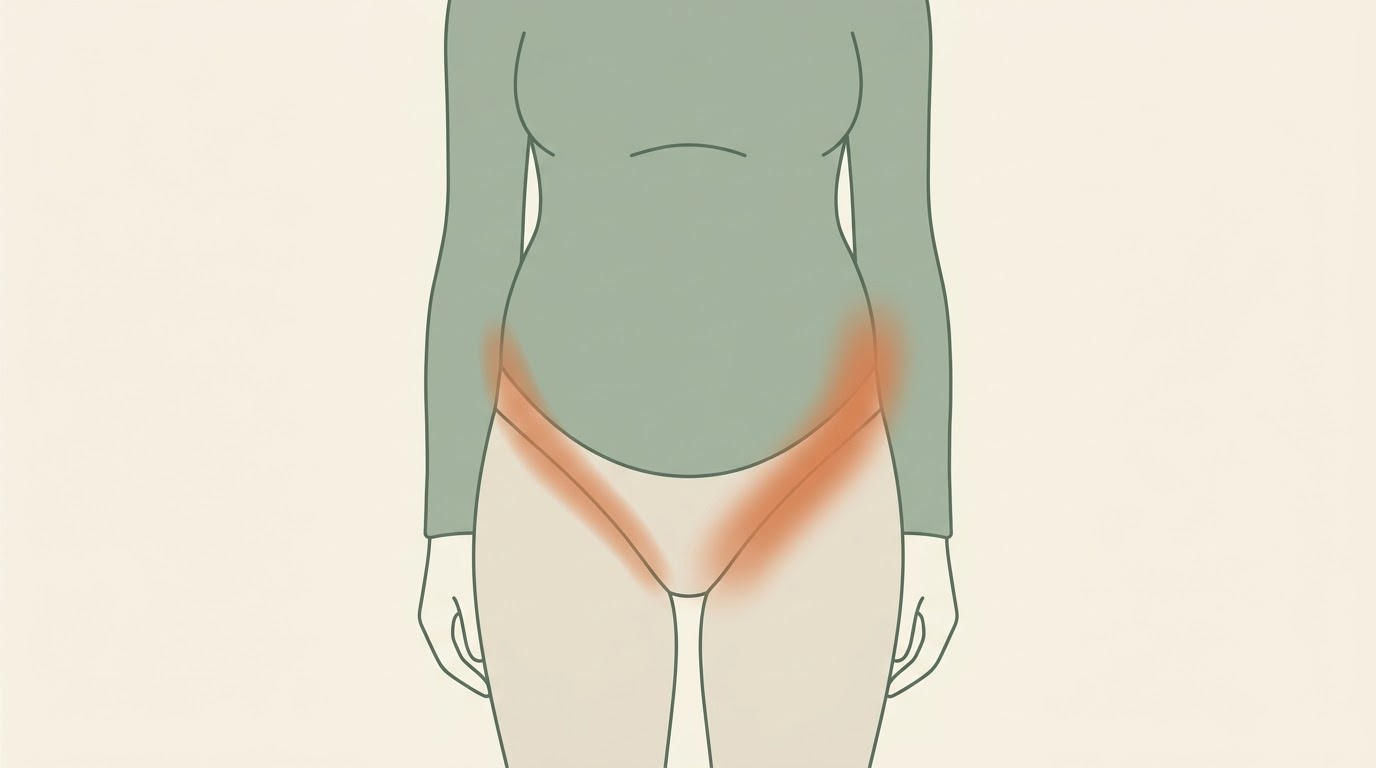
Women describe a sharp, stabbing or pulling sensation, an ache, a cramp or a spasm, according to Cleveland Clinic’s round ligament pain guide (reviewed March 2024). It sits low in the belly, in the hip or down in the groin, on one side or on both. Marshfield Clinic offers a handy picture: trace the pain on your skin and it follows the bikini line of a very high-cut swimsuit.
Cleveland Clinic places round ligament pain in the second trimester, weeks 14 through 27.
If you come to us from Brentwood, notice whether the pull grabs you as you climb out of the car, and jot down how long each episode lasts.
Why It Happens: A Growing Uterus and Stretching Ligaments
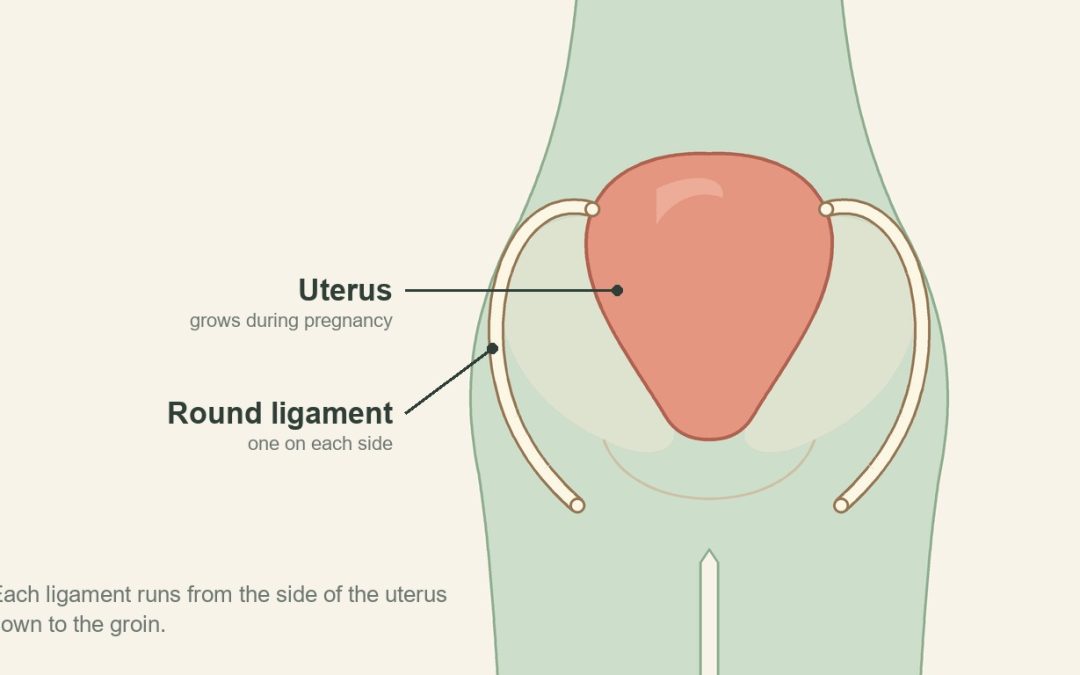
The round ligaments are two rope-like bands, one on each side of the uterus, each about 10 to 12 centimeters long. According to the NIH-hosted anatomy guide StatPearls (2023), each one attaches to the upper, outer side of the uterus and runs toward the groin through the inguinal canal.
As the uterus expands, Cleveland Clinic explains, these ligaments get longer and wider because they are supporting your growing belly. They also contract and loosen slowly. So a sudden move asks an already stretched ligament to react faster than it can. I played professional soccer, so I know what it feels like when tissue is asked to react faster than it is ready to.
That is why the common triggers are everyday moves: standing up quickly, rolling over in bed, sneezing, coughing, laughing and exercising. Cleveland Clinic states plainly that “Round ligament pain is a common and normal symptom of pregnancy,” and also that it is best to tell your provider so they can make sure it is not something more serious.
Round Ligament Pain Relief You Can Try Today
Most relief means slowing the movement that triggers the pull and supporting the belly.
- Change positions slowly, and avoid standing, sitting or rolling over suddenly.
- Lean forward and put your hands under or over your belly before a sneeze, cough or laugh, or flex your hips.
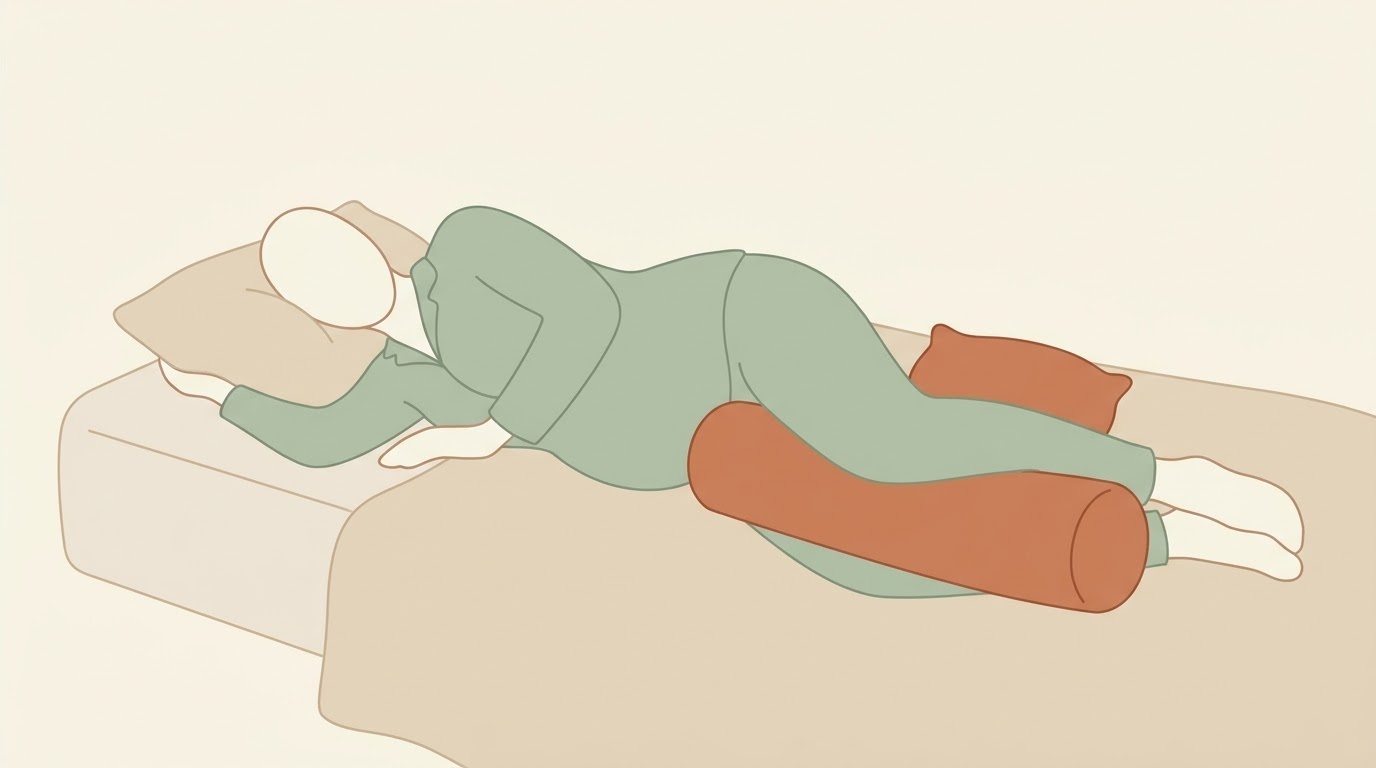
- Rest on your side with a pillow under your belly and another between your knees, which ACOG also suggests for back comfort.
- Take a warm bath, not a hot one.
- Wear an elastic belly band or maternity support garment; ACOG describes these as taking the weight of the belly off the back.
- On days when the pull is worse after being on your feet, cut back your activity and build up again gradually.
Marshfield Clinic puts it simply: “Resting comfortably should alleviate your symptoms.” Gentle stretching or prenatal yoga may also help, but only with your OB provider’s go-ahead, and ACOG says to stop any exercise that causes pain. If the pain does not settle with rest, skip the home tips and call your OB.
Is It Round Ligament Pain, or Something Else? A Quick Comparison
Most rows below follow the wording of ACOG, Cleveland Clinic and Marshfield Clinic. It is a screening guide, not a diagnosis, and if the pattern does not fit, call.
| Type of pain | Where and how long | What goes with it | What to do |
|---|---|---|---|
| Round ligament pain | Low belly, hip or groin, one or both sides; seconds to minutes | Sudden movement, rolling over, sneezing, coughing, laughing | Home care; tell your provider; call if it lasts for hours |
| Contractions or preterm labor | Cramps, pelvic or lower belly pressure, a constant low dull backache | Regular or frequent tightening that is often painless; a change in discharge or fluid leaking | Call your OB right away or go to the hospital |
| Urinary tract infection | Can show up as back pain | Fever, burning when you urinate, vaginal bleeding | Call your provider; with fever, call right away |
| Deep pelvic joint pain | Deeper in the pelvis rather than along the bikini line | A separate problem from a stretched ligament | Tell your provider |
The preterm labor row matters most. ACOG’s preterm labor guidance defines preterm labor as labor that starts before 37 weeks, says it can happen to anyone without warning, and adds: “If you have any signs or symptoms of preterm labor, do not wait.”
A 2025 case report in the International Journal of Women’s Health (Hassan and colleagues) described a woman at 33 weeks whose right-sided lower belly pain was first put down to round ligament strain and turned out to be appendicitis. It is one case, not a statistic, but worsening pain or fever never gets a “probably the ligament” answer from me.
How Prenatal Chiropractic Care in Franklin May Help With the Muscles and Joints Around It
Round ligament pain itself is a ligament-stretch symptom, and I do not claim chiropractic care changes it. In my practice, I look at the body around the ligament: the back, hips and pelvis carrying new weight in a new place. ACOG notes that the expanding uterus shifts your center of gravity and strains the back.
A Cochrane review (Liddle and Pennick, 2015) pooled 34 randomized trials involving 5,121 pregnant women. It graded the overall evidence as moderate to low quality. Single studies in that review suggested that osteopathic manipulative therapy, a hands-on approach used by osteopathic physicians, reduced low back pain and disability, and that adverse effects, when reported, were minor and transient.
A later systematic review in the Journal of Manipulative and Physiological Therapeutics (Weis and colleagues, 2020) rated chiropractic care for pregnancy low back pain as inconclusive but favorable, and spinal manipulation on its own as unclear. Neither review tested manual therapy for round ligament pain, so please read this as research that is still developing, not as a promise.
At The Healing Place in Franklin, a visit starts with your history and an exam. I use gentle adjustments, and I may use the Webster technique, a chiropractic approach focused on pelvic balance. I treat low back and pelvic joint pain with that gentle, pregnancy-adapted care, and I describe the work around round ligament pain as support for comfort and movement.
Our neurologically focused approach also includes the INSIGHT nervous system scan, a screening tool that looks at how your nervous system is adapting as pregnancy changes your body. For Williamson County moms and dads, I also look at posture and sleep positions, starting with how you sit through a workday. Any red flag goes straight back to your OB or midwife.
More on Dr. Anthony Putrus, DC, our prenatal chiropractic in Franklin, TN, and what research says about chiropractic safety.
When to Call Your OB or Midwife, Without Waiting
Cleveland Clinic cautions that abdominal pain can be a symptom of other conditions, so pregnancy pain is never a self-diagnosis.
Call your OB-GYN or midwife right away, or go to the hospital, if you have any of these:
- Regular or frequent contractions or tightening before 37 weeks, including more than four in an hour even if they do not hurt (ACOG; Marshfield Clinic).
- Pelvic or lower belly pressure, or new, constant, low, dull back pain, which ACOG lists among the signs of preterm labor; Cleveland Clinic and Marshfield Clinic also list new low back pain or pelvic pressure.
- Vaginal bleeding or spotting, any fluid leaking, or a change in the type or amount of vaginal discharge (ACOG; Cleveland Clinic; CDC).
- Fever (the CDC lists 100.4 degrees F or higher; Cleveland Clinic).
- Chills, dizziness or fainting, or nausea or vomiting that is not related to morning sickness (Cleveland Clinic; Marshfield Clinic; CDC).
- Severe belly pain or cramping that does not go away (CDC; Cleveland Clinic), or your baby’s movement slowing or stopping (CDC).
Call your OB-GYN or midwife the same day if you have any of these:
- Pain that keeps coming back or lasts longer than the quick, seconds-long jab (Marshfield Clinic), or that has not gone away after a few hours (Cleveland Clinic).
- Pain or burning when you urinate (ACOG).
- Severe back pain, or back pain that goes on for more than two weeks (ACOG).
ACOG’s advice for signs of preterm labor is to call right away or go to the hospital.
Round Ligament Pain Questions, Answered
Is round ligament pain normal?
Yes. Cleveland Clinic calls it a common and normal symptom of pregnancy, and it is usually harmless. Tell your OB or midwife anyway. Call right away if it comes with bleeding, fluid leaking, regular contractions or fever, and call the same day if it keeps returning or will not ease with rest.
Can round ligament pain start in early pregnancy?
It can. Cleveland Clinic says round ligament pain usually occurs in weeks 14 through 27 but can appear earlier or later in pregnancy. Early pain has other possible causes, so tell your provider about it and check it against the call-your-OB list above instead of assuming it is the ligament.
How long does round ligament pain last?
Each episode typically lasts a few seconds or minutes. Across the pregnancy, some women find it eases by about the third trimester, while others do not feel complete relief until after delivery, according to Cleveland Clinic. If the pattern changes, tell your provider.
Can round ligament pain last all day?
Not usually. Episodes typically last seconds or minutes, and Cleveland Clinic says pain that does not go away after a few hours means calling your provider. Constant or recurring pain also falls under the same-day call list above, because it may be something other than ligament stretch.
What helps round ligament pain at night?
Lie on your side with a pillow between your knees and another under your belly, as ACOG and Marshfield Clinic both describe. Cleveland Clinic adds that you can try lying on the side opposite the pain. When you turn over, move slowly.
Can a chiropractor help with pregnancy pain?
It may help musculoskeletal low back and pelvic joint pain, which I treat with gentle, pregnancy-adapted care. For round ligament pain, a stretch symptom, I offer support for comfort and movement. The research is still developing: a Cochrane review rated the evidence moderate to low quality, and Weis (2020) called chiropractic care for pregnancy low back pain inconclusive but favorable.
Where do you feel round ligament pain?
Low in the belly, in the hips or in the groin, on one side or both, following the bikini line in Marshfield Clinic’s description. Pain that sits deeper in the pelvis does not match that map. If yours does not match, call your provider.
Is a sharp pain in the lower left side in the third trimester normal?
It can be ligament stretch, since Cleveland Clinic notes round ligament pain can appear later than the usual weeks 14 through 27. I do not guess from a distance, though. Check it against the red-flag list above, and call your OB if anything on it applies or the pain will not ease with rest.
Getting Started in Franklin, Alongside Your OB or Midwife
If those sharp pulls have you tiptoeing through your own day, come see us at 1261 Columbia Avenue in Franklin. I build the plan together with your OB or midwife instead of around them, and you will have my full attention for your questions. Book a consultation at our consultation page, schedule directly at our booking page, or call (615) 455-5350 and we will find a time that fits.
You can also see how we approach pregnancy wellness in Franklin, TN. I would be glad to meet you and your baby bump.