
Have you ever left a chiropractic appointment with more questions than answers? You got adjusted, maybe even received a few sheets of paper with exercises, but no one explained what was actually happening in your body or why the care plan looked the way it did. That kind of experience can feel disorienting. It can leave you wondering whether the treatment was chosen for you or whether it was simply the routine applied to everyone who walks through the door. For many adults, that lack of explanation becomes the real reason they stop going to the chiropractor at all.
That frustration is understandable. You want to know what is happening in your own body. You want to see the reasoning behind each step of your care, and you want to feel confident that your time, effort, and money are going toward a plan that actually fits your situation. So here is what that looks like at our clinic. Every new patient starts with an insight scan new patient chiropractic assessment before any hands on work happens. That scan is not a formality. It is the reason we can explain exactly why we recommend certain adjustments and how we track your progress over time.
Why measuring your nervous system function comes first
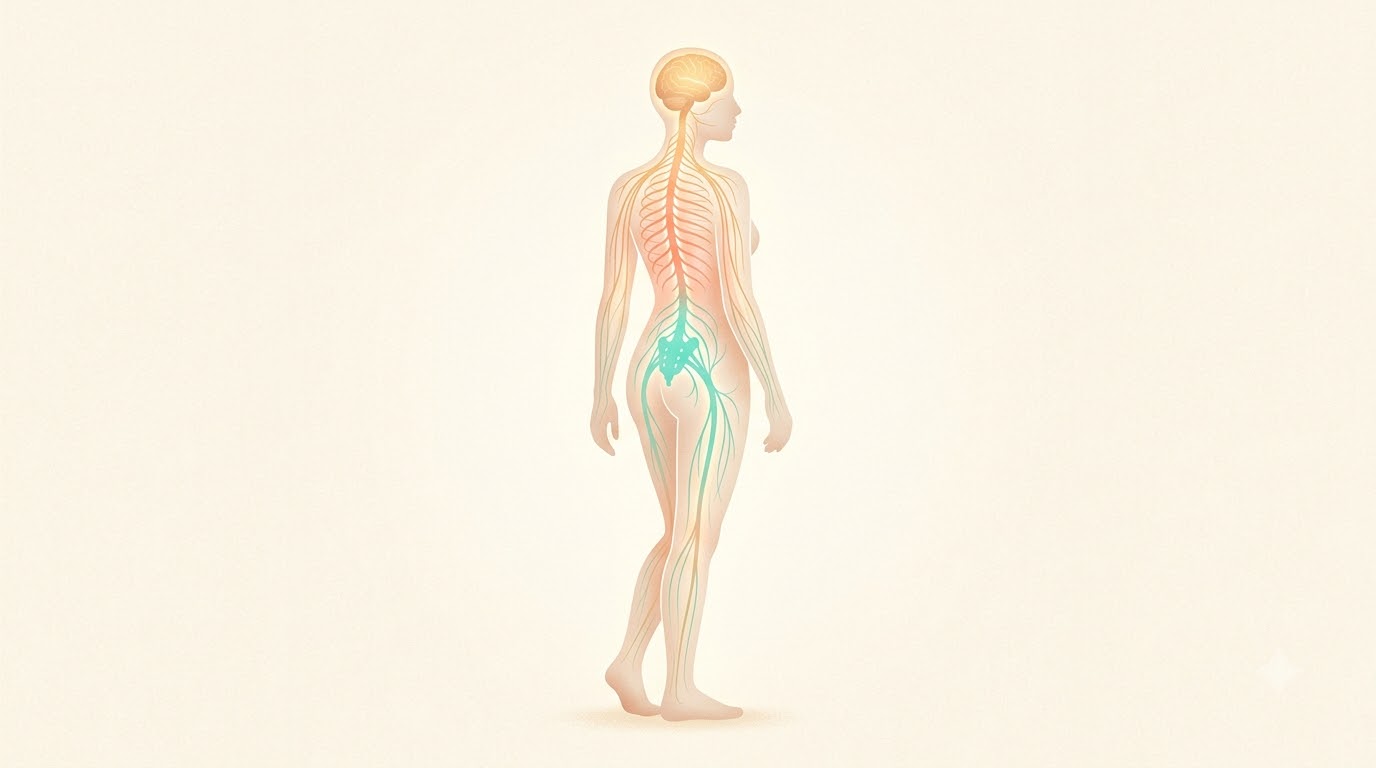
The nervous system is the command center for your entire body. It regulates your heart rate, your digestion, your muscle tone, your immune response, and the way you experience stress. When something in that system is not communicating clearly, your body does not always know it at a conscious level. The problem might be subtle, such as a muscle group staying active when it should be at rest, or a body that is perpetually in a low level stress response. Those patterns can build up over months and years, and they often show up long before you feel a specific ache or pain.
That is why we run the scan before we adjust. If we adjust based on how you feel on a given day, we are only guessing at what the underlying issues might be. A scan gives us real data from your body about how your nervous system is handling everyday demand. It shows us where the communication may be interrupted and where the body is working harder than it needs to. This is not a theory. It is a set of measurable readings that we can review together and revisit on your next appointment.
When you can see that data, the whole care plan changes. Instead of being told to trust the process, you are shown a picture of your nervous system and told what each number represents. That is the root cause oriented way of approaching chiropractic care. We are not just looking for the painful spot. We are looking for the underlying pattern of stress that may be contributing to your symptoms.
The three sensors of the Insight scan
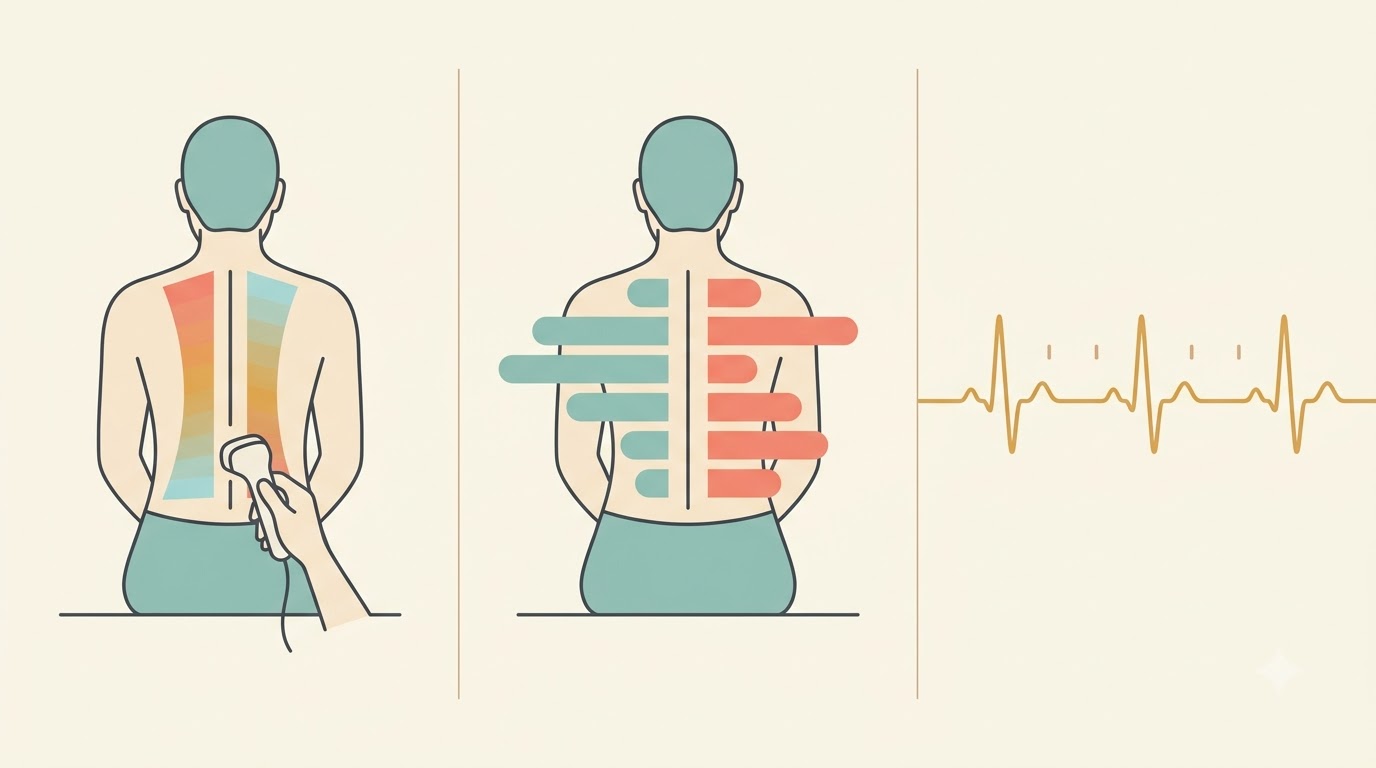
The Insight scan uses three separate sensors to gather a full picture of your nervous system function. Each sensor measures something slightly different, and together they give us a broader understanding than any single test could offer.
The first sensor measures thermal patterns along your spine. A small instrument travels slowly down your back, reading the heat that your skin gives off. Your skin temperature is influenced by the autonomic nervous system, the same system that controls heart rate, blood pressure, and digestion. When your nervous system is in a balanced state, the temperature along the left and right sides of the spine should be relatively symmetric. When there is a deviation, it suggests that one side is getting more nervous system drive than the other. That is not a diagnosis, but it is a valuable clue. It tells us where the body may be spending extra energy trying to manage stress.
The second sensor is surface electromyography, or sEMG. This measures the electrical activity in the muscles alongside your spine. It is completely passive. A small probe glides over the skin and reads the tension that your muscles are holding at rest. Many people are surprised to see how hard their back muscles are working even when they are lying or sitting still. The surface EMG reveals patterns of holding and guarding that you might not feel consciously. When one side of the spine shows much higher activity than the other, that muscle group is likely working overtime. Over time, that imbalance can pull the spine out of its natural alignment and contribute to tension and fatigue.
The third sensor is heart rate variability, often abbreviated as HRV. This measurement looks at the tiny variation in time between each heartbeat. You might assume a steady heartbeat is the healthiest pattern, but healthy hearts actually have a subtle rhythm of variation. That variation is controlled by your autonomic nervous system. A higher level of variability usually suggests a system that is adaptable and responsive to the world around you. A lower level may suggest that your nervous system is stuck in a state of stress or fatigue. Research by Shaffer and Ginsberg, published in 2017, reviewed the norms for heart rate variability and confirmed that HRV is a meaningful indicator of nervous system adaptability and stress. Their work helps us interpret what your HRV numbers might mean in your daily life.
When these three sensors are combined, you get a layered view of your nervous system. Thermal scans tell us about autonomic balance, surface EMG tells us about muscle holding and tension, and HRV tells us about overall adaptability. Together, they create a baseline that we can compare against on later visits to see if your care plan is making a measurable difference.
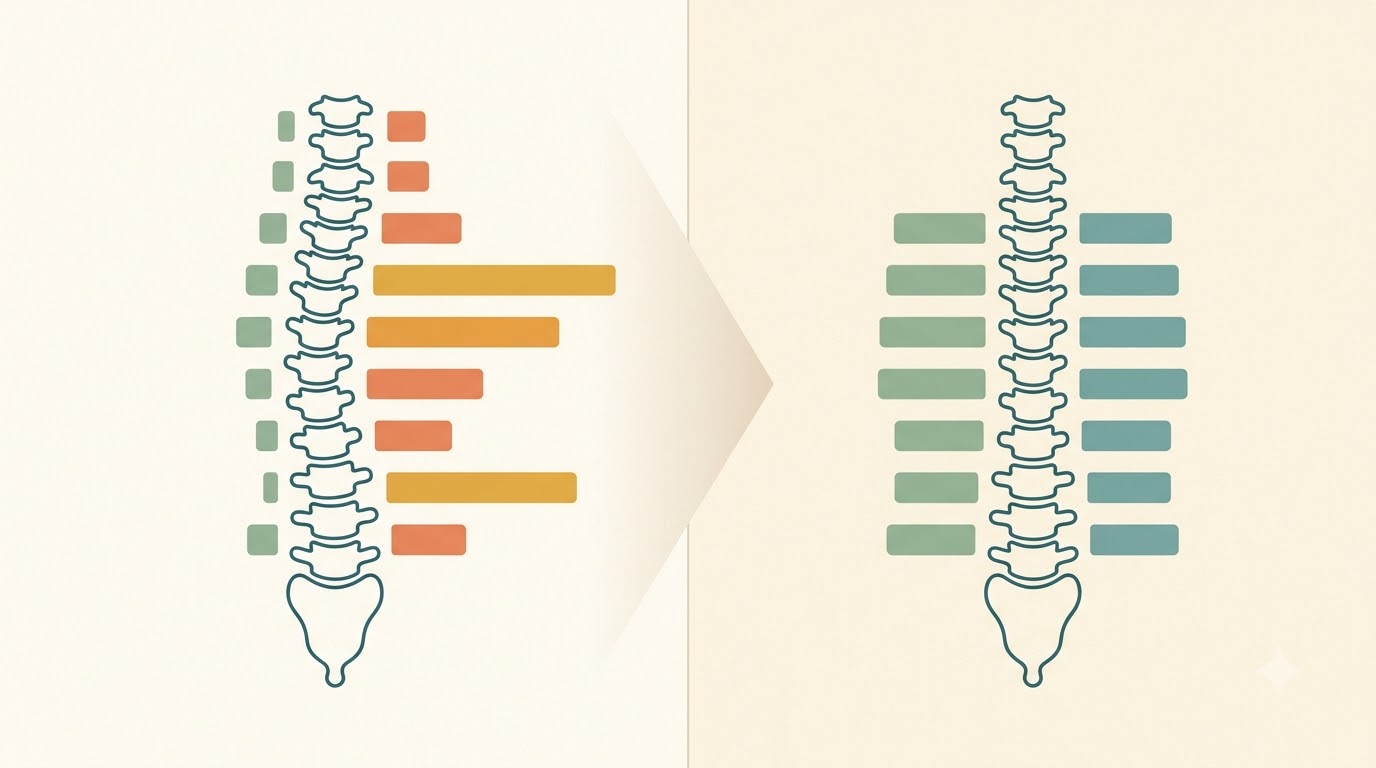
I remember a patient in her late forties who came to us with chronic upper back discomfort and a general sense of fatigue. She had seen other chiropractors before and had received adjustments, but nobody had ever shown her why her body was responding the way it was. She came to us feeling a little worn down by the whole experience. When we ran her Insight scan, the surface EMG showed that her upper back muscles were holding at nearly double the expected level of tension while she was resting. Her thermal reading also showed a clear difference between the left and right side. Her heart rate variability was lower than we would typically expect. We sat down and walked her through the readings together, showing her exactly what her nervous system was doing. She looked at the screen and said this is the first time anyone has explained to me what is going on in my body. In the following weeks, as we started gentle adjustments that targeted the areas of imbalance, we re scanned her at each recheck. We watched her thermal symmetry improve, the muscle tension drop, and her heart rate variability climb back into a healthier range. She did not just feel better. She understood why she was feeling better.
Why Insight Scanning Technology Beats Guessing
You might ask whether the scan is really necessary or whether a skilled chiropractor can simply feel the body with their hands and know what to adjust. The answer is yes, a good practitioner can feel a lot. But there are limits. Palpation tells you about the position and tone of tissues, but it does not tell you much about how the nervous system is actually regulating the body from a deep level. For example, you can feel a tight upper back, but that does not tell you why the muscles are holding, or if the autonomic nervous system is stuck in a stress response, or whether the body has the adaptability to respond to the adjustment in a healthy way.
The Insight scan addresses that limitation. It gives you a layer of information that your hands cannot produce. That information is why our approach feels different to so many patients. It takes the guesswork out of the first visit and makes the care plan something that follows the logic of your body. If your scan shows that your nervous system is extremely disorganized, we can adjust the plan accordingly. If your scan shows only a small area of interference, we can focus the work there. If your scan shows that your nervous system is adapting well, we can tell you that honestly and recommend a maintenance plan rather than over treating.
This is the whole-body approach at work. We are not chasing the symptom. We are looking at the system that creates the environment for symptoms to develop. When you understand that, it becomes easier to understand why the spine gets the attention it does. The spine houses the spinal cord, the highway of communication between the brain and the rest of the body. If that highway has areas of interference, signals may not travel as clearly as they should. Chiropractic adjustments aim to improve the communication along that highway, and the scan helps us confirm whether the nervous system is actually responding the way we intend.
What to expect during your first scanning appointment
When you walk in for your first visit, you will sit down with one of our team members and talk about your health history, your current symptoms, and what you hope to get out of care. This is your time to ask questions and share anything that feels important. Then the scan itself is simple and completely painless. You will stand in a relaxed position while a hand held instrument slides along the skin of your spine, measuring the thermal and surface EMG signals. You will then sit quietly for about two minutes while the heart rate variability reading is taken from a sensor placed on your ear or finger. The whole process usually takes less than ten minutes. There is no pain, no you have no needles and nothing to be nervous about.
After the scan, we sit down with the results in front of you. We walk you through each reading, explaining what is a normal range, what we see in your data, and what that might mean in the context of your symptoms and your life. We do not use dense medical jargon. We use plain language so that you leave with a clear picture of what your nervous system is doing and why it matters. This is the educational part of our approach, and it is one of the reasons patients often say that their first visit feels like a consultation rather than a procedure.
You will also receive a plan that is built around the findings of the scan. If the scan suggests that chiropractic care would be helpful, we will discuss how many visits you might need and how often you will be re scanned to measure progress. If the scan suggests that the primary problem is something that chiropractic is not suited to address, we will tell you that honestly. Our goal is to help you find the right path, even if that path does not include adjustments.
Frequently asked questions about our chiropractic scans
Does the scan hurt?
No. The scan is completely painless. The sensor is made of smooth metal and does not need to press into your skin. It just glides lightly along the surface. The heart rate variability sensor is applied to your ear lobe or wrist. There is no discomfort at all. Most patients describe the experience as relaxing because you are simply standing or sitting still while the device does the work.
How long does the scan take?
The full scan, including all three sensors, usually takes about ten minutes. When you add the health history conversation and the results review, the total first visit may be around thirty to forty minutes. We want you to have enough time to feel fully informed, so we will not rush that conversation. If you have many questions, we will give you time to ask them all.
Do you need insight scans again on every visit?
No. The scan is the foundation of your first visit and then it becomes part of your scheduled rechecks. We typically repeat the scan at specific milestones in your care plan, such as after four to six visits, or whenever we want to see if the nervous system is responding as expected. The reason we rescan is to compare the numbers against your original baseline. That gives you a direct feedback on whether the care plan is working. You are never asked to get the scan on every adjustment visit.
Why are these scans useful without pain?
Many patients come to the clinic not because they are in pain but because they feel sluggish, anxious, or simply not at their best. The scan is a valuable tool in those cases because it can reveal where the nervous system is spending its energy. Someone who is not hurting can still show signs of a nervous system that is over stressed or out of balance. Those early signs can be addressed before they become a bigger problem down the road. Research suggests that tracking HRV and other nervous system measures may help with early detection of imbalance, which makes the scan useful for preventive care as well as for chronic complaint.
Ready to understand your own nervous system
If your past experience with chiropractic care has felt like a ride without a map, we invite you to try a different kind of first visit. The insight scan gives you the information you need to feel like an active participant in your own health. You are not just told what to do. You are shown why it makes sense. That clarity is the first step toward healing, because you cannot treat what you do not understand. You can learn more about the philosophy that guides our clinic in this post about what makes The Healing Place different, you can read about the approach of Dr. Anthony on his page, and you can explore all the technical details of the scan on our dedicated insight scan page. When you are ready, book a visit. We would love to run your scan, sit down with you, and help you see what your nervous system has been trying to tell you.
Many patients report that having the scan in their first visit changed how they think about chiropractic care. It is not just about the adjustment. It is about the whole picture of what your nervous system is doing every day. It is about learning why your body holds tension, why you feel tired, and why your stress might not always show up as an obvious pain. The scan brings those hidden patterns into the light.
If you want to learn more about how neurological care fits into your life, or if you are simply curious what your numbers would look like, you can book a new patient appointment and find out for yourself. You do not need a referral. You just need to be curious about the way your body works. The insight scan new patient chiropractic assessment is the first step toward that understanding.
The information on this page is provided for educational purposes only and is not intended as a substitute for the advice of a qualified healthcare professional. The content is not meant to diagnose, treat, cure, or prevent any disease. Always consult your doctor or another qualified health provider about any questions you have with a medical condition. Individual results may vary, and the outcomes described in this article are not guaranteed for every patient.